Spectronight · Digital Night Vision
You Didn't Lose Him in the Dark. Your Device Did.
Every night vision device has a point where it stops being useful. The question worth asking before you buy is what decides that point — and whether it is something you can do anything about.
The contact you never made
You are on a treeline at two in the morning. Cloud has come in and taken the moon with it. You know something moved out there four hundred metres away, and you have eight thousand pounds of night vision on your helmet telling you nothing at all.
Nobody sold you the device that way. The specification said a detection range that sounded generous, and under a full moon on a clear night it was honest. But the night you actually needed it was not that night. It was this one.
This is the part of night vision that rarely gets discussed properly. The number on the box is measured in good conditions. Your work happens in the other ones — under cloud, in built-up areas with headlights sweeping past, indoors, in weather, after the kit has been dropped twice.
And the frustrating part is not that the equipment has limits. Everything has limits. It is that you were never told which limit you were buying.
We have heard this from enough operators to take it seriously
CEBAR builds electro-optical systems from Abu Dhabi — digital night vision, digital fire control, and ballistic radar. We spend a lot of time with people who use this equipment at night for a living: police units, search and rescue teams, security operations, defence customers.
The same account comes back repeatedly. Not that the device broke. That it quietly stopped being useful at the moment conditions got difficult, and there was no warning in the specification that it would.
So rather than publish another range figure, here is the actual physics of where night vision stops — for image intensifier tubes and for digital alike. It is not complicated, and once you can see it, you can compare any two devices honestly, including ours against someone else's.
Two different ways to see in the dark
An image intensifier tube amplifies. Faint light enters, becomes electrons, gets multiplied thousands of times, and lands on a phosphor screen as a picture. It is elegant, it is instant, and it has been refined for sixty years. It also has two limits welded into how it works: it cannot amplify light that is not there, and it amplifies everything — including a torch pointed at your face.
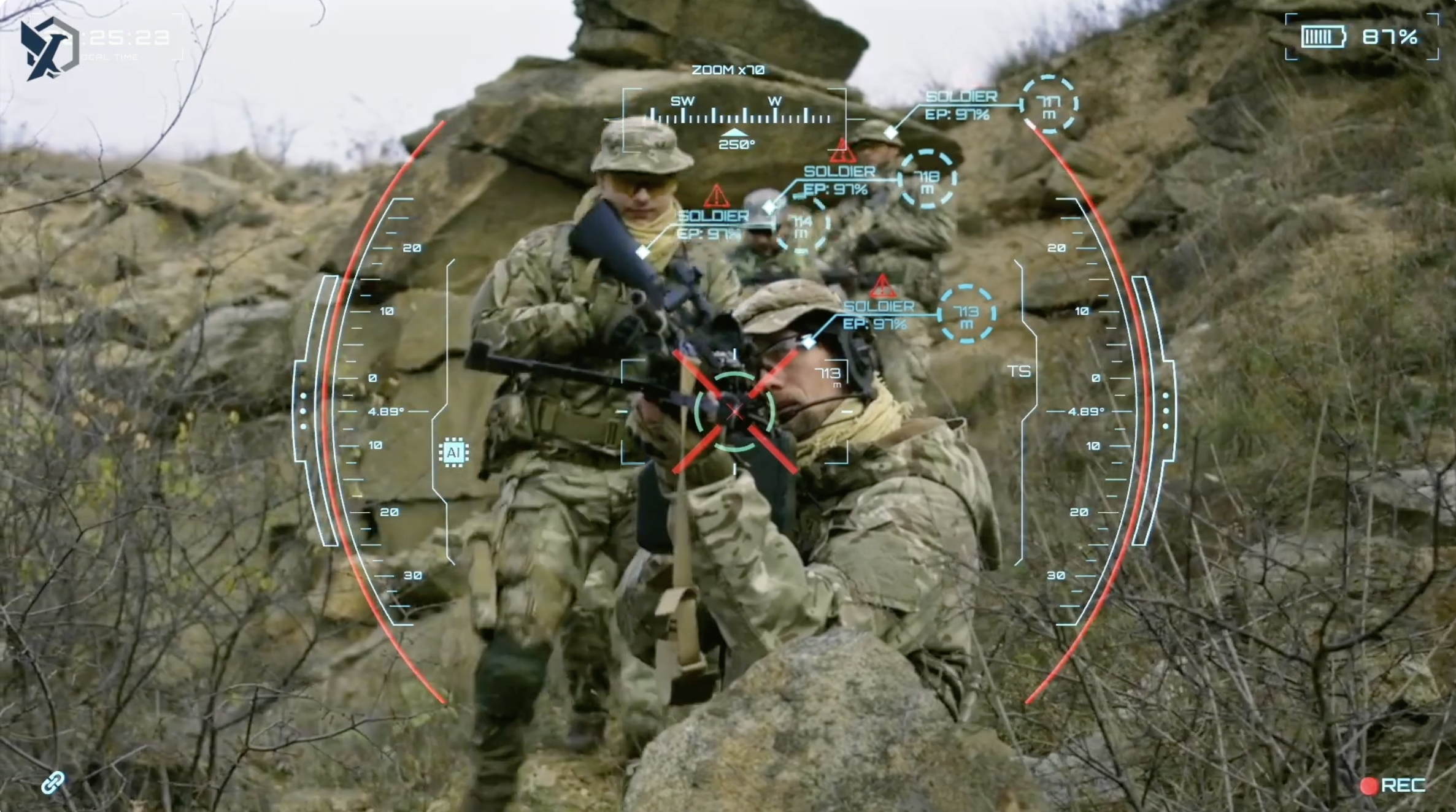
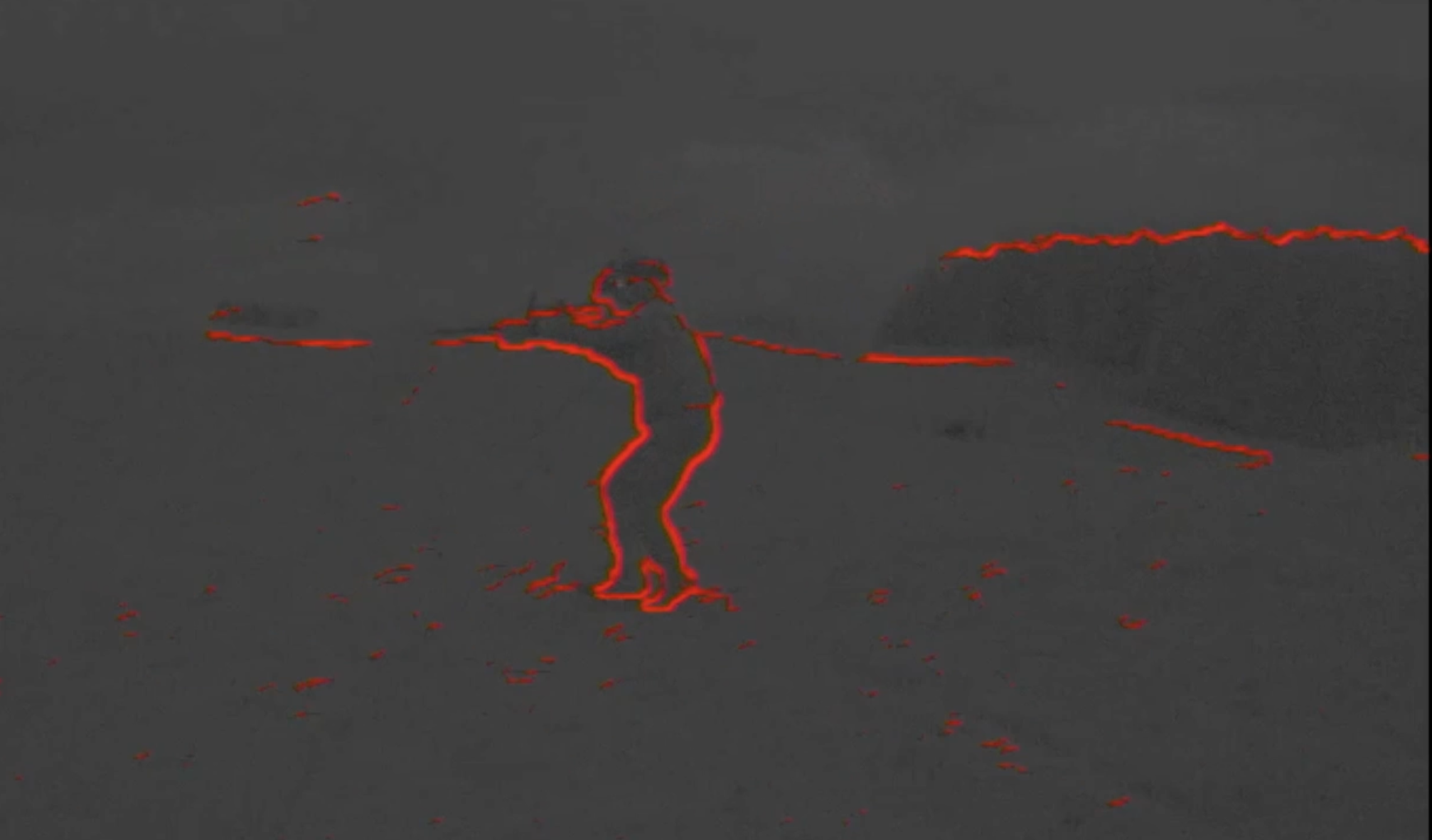
A digital device records and reconstructs. Light lands on a sensor, a processor decides how bright each region of the picture should be, and the result appears on a display. Because the image is data before it is a picture, different parts of one frame can be treated differently — a headlight pulled down while the shadow beside it is lifted.
That single difference explains most of what follows. Amplification runs out when the night runs out of light. Processing does not.
A test you can run yourself
Point a Spectronight device at a clear night sky. You will see stars — individual points of light, resolved, against black. Starlight is the faintest useful light there is. If the device renders that as a distinct point rather than a smear, light is no longer what is limiting it.
The three numbers that matter, not the one you are shown
Range is not one figure. It is three, and they always fall in the same proportion:
| DETECT | Something is there that was not there before. |
| RECOGNISE | It is a person, rather than an animal or a post. |
| IDENTIFY | You can tell which person. |
Each step needs roughly twice the detail of the one before, so each step roughly halves the distance. On the 1-inch-sensor Spectronight units that runs 935 m detection, 468 m recognition, 234 m identification against a person — and 1,265 / 633 / 316 against a vehicle.
When a competitor quotes one large number, it is almost always the detection figure. Ask which of the three it is. The answer tells you a great deal.
Why distance has a limit at all
Once light stops being the constraint, resolution takes over. A digital device paints onto a fixed grid — 800 × 600 pixels, spread across 40° by 30° of view. That works out at one twentieth of a degree per pixel, and the further away you look, the more ground each pixel covers.
At 250 m one pixel covers about 22 cm. At 935 m it covers about 82 cm. A person is roughly 180 cm tall, so at 935 m they are a little over two pixels — enough to know something is there, nowhere near enough to know what.
This is why target size matters more than anything else at distance, and why a vehicle is recognised at very nearly the range a person is merely detected. It is also why an intensifier tube has exactly the same ceiling, described in different units: line pairs per millimetre measures the same thing.
Both technologies run out of detail long before they run out of image. The difference is which one runs out of light first.
What happens when conditions turn
Range figures are measured in ideal, undisturbed conditions. Most of the difference you will notice in the field comes from what happens when conditions are anything but.
| Situation | Tube | Digital |
| Almost no light | Nothing to amplify. Picture goes dark. | Grainy, still usable. |
| Torch in your face | Tube damaged, or shut down to protect it. | Dims that area of frame only. |
| Lights at distance | Blooming and glare across the picture. | Sources pulled down, surroundings visible. |
| Dropped or knocked | Glass under vacuum. Cracks, permanent dark spots. | Solid state. Housing fails before the sensor. |
Free download
The Analogue vs Digital Comparison Sheet
One page. The range-versus-light chart, the pixels-on-target diagram, and the four field conditions side by side — including where digital still loses. Print it, take it to a trade stand, and use it to interrogate any manufacturer, us included.
Download the comparison sheetHow to choose, in three steps
1. Decide which of the three numbers your work actually needs. A search team needs detection. An enforcement unit needs identification. Those are different devices at different prices, and buying the wrong one is expensive in both directions.
2. Ask what limits the device you are shown. If the answer is light, its range will collapse on the nights that matter. If the answer is resolution, it will hold.
3. Test it in the worst conditions you can find, not the best. Under cloud. With a torch in your face. Near streetlights. That is where the specification stops describing the device.
Do that and you will end up with equipment whose behaviour you can predict — which is the whole point. Not a device that performs brilliantly on a clear night, but one that performs the same on every night, so you already know what you will see before you put it on.
Skip it and you are back on that treeline, holding an expensive object, wondering whether the absence of a picture means there is nothing out there.
Want to see it against your own conditions?
We arrange evaluations for professional and government users, and we would rather you tested the device somewhere difficult than somewhere flattering.
Request an evaluation
Klara Kozak is the kind of person who launched the world's first pocket chronograph and thought, "what's next?" Now leading International Market Development at CEBAR Industries, she's introducing UAE-built digital scopes, night vision, and ballistic radar to the professionals and competitors who demand more from their optics. She also runs Drekki, a strategy studio built for founders with wild ideas and zero tolerance for beige.
Continue Reading